Technical Guide
Armoured vs Rubber Trailing: Which Mining Cable for Your Route?
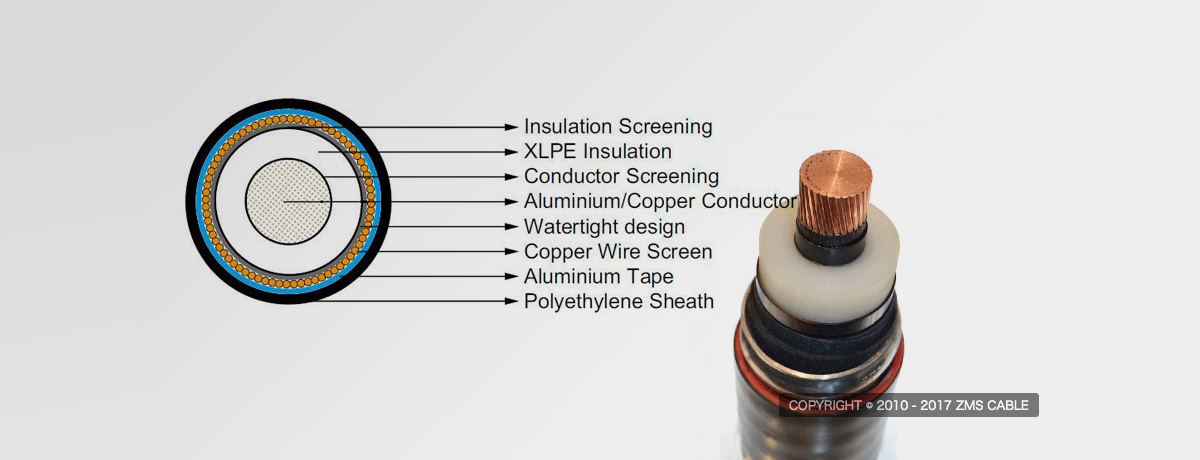
Two cable families are sold as “mining cable”, and they are not interchangeable. The choice follows one route fact: whether the cable is fixed or moving. Armoured power cable protects a fixed roadway route against impact and rock fall; rubber trailing cable absorbs the dragging and flexing of a moving face. Specifying the wrong one means either an over-engineered fixed route or a trailing cable that fatigues in weeks. Fixed roadway distribution → armoured. Coal face and mobile equipment → rubber trailing.
Explore Mining Power Cables →
Technical Guide
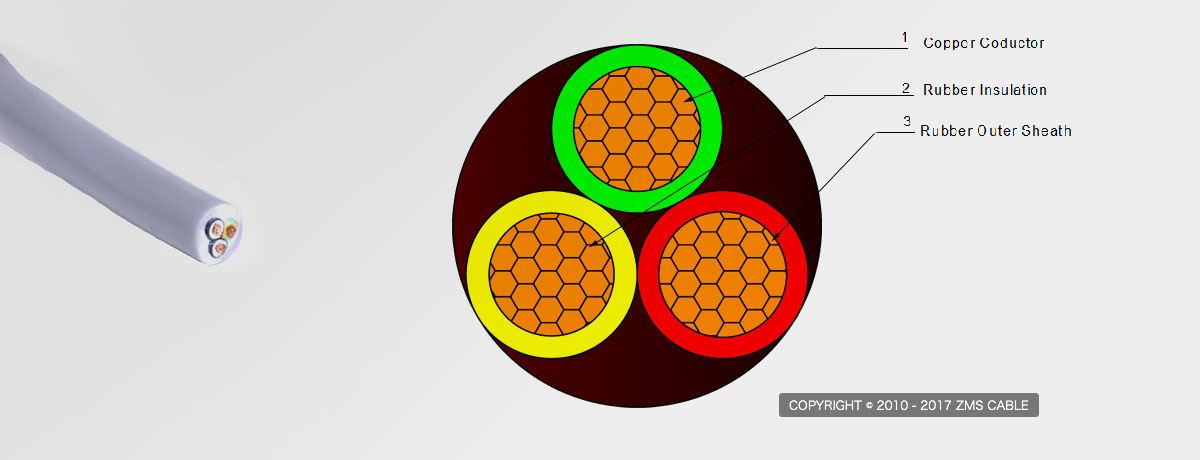
Trailing Cable Construction for Coal Shearers: EPR, Class 5/6 and the Chloroprene Sheath
A shearer trailing cable fails first at the point of maximum flex, not at the electrical stress. Three construction details determine service life: fine-stranded Class 5/6 conductors that resist fatigue, EPR insulation that keeps flexibility at the 1.9/3.3 kV and 3.6/6 kV face ratings, and a chloroprene sheath that survives dragging and oil. Built to AS/NZS 1802, the cable carries power plus earth and pilot cores for the machine’s monitoring circuits.
Explore Trailing Cables →
Industry Insight
Communication Circuits: Why Mine Communication Cables Limit Circuit Energy
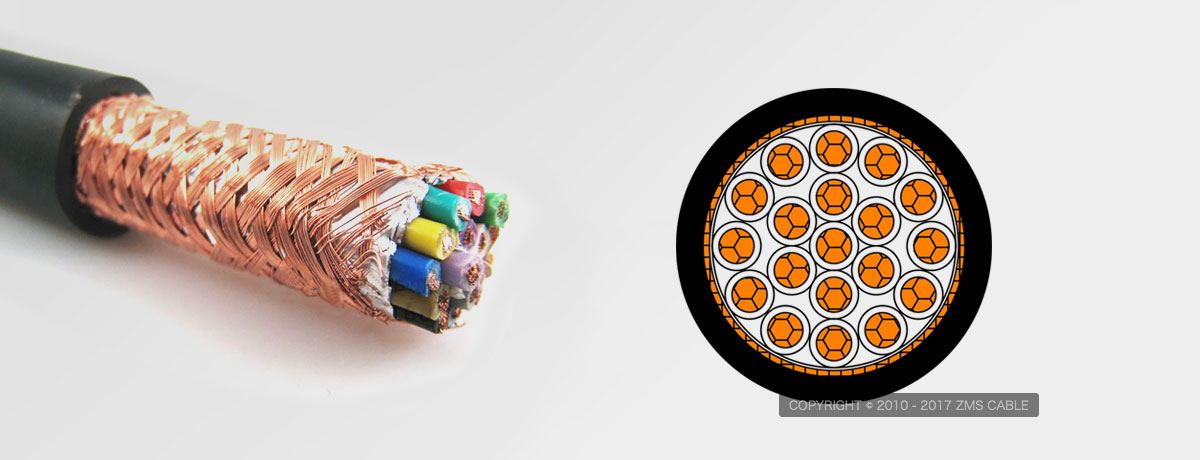
In a gaseous mine, a monitoring circuit must not be able to release enough energy to ignite the atmosphere — that is the whole point of an intrinsically safe (IS) loop. The cable is part of the circuit, so its capacitance and inductance are constrained, and its sheath must not contribute to flame propagation. This is why IS communication cable uses twisted pairs with reliable screening and a flame-retardant sheath, built to IEC 61158 and AS/NZS 1802.
Explore Communication Cables →